
My streak has increased to 4! I have now uploaded a short story each month for four months on Deadlines for Writers. You can learn more about how impactful this has been to me, check out my previous posts – One Deadline Started it All and It’s Deadline Day! Each month we get a prompt, word limit and four weeks to write a short story.
Each month, I learn something through the process. (Yes, more than one but I’ll just focus on one thing.) This month, it was about editing, but I’ll talk about that in a minute. First I want to introduce this month’s story for the theme of “Faded Dreams”, 1000 word count – A Round of Love. (PS – I don’t like the title but really couldn’t come up with something I liked.)
Word count is an ongoing challenge but I’m welcoming the things it forces me to learn and consider the “size” of a story, making sure every word counts and being very clear on the plot points I want to make. I had an extra 250 words which made me happy – the shorter the word count, the bigger the struggle for me. Even with the extra words, I think I bit off more than I can chew on this one but when I had the idea, I was pretty stuck on making it work.
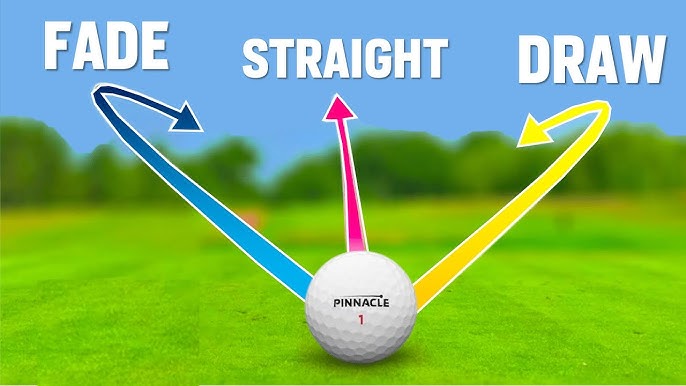
I wanted to tell a story across 9 holes of golf and the story needed to cover the entire golf season. I actually did more planning for this story than I had done to this point, realizing I would only have 100ish words for each scene. I really wanted a golf theme – a faded shot in golf is one where the ball flight shapes left-to-right for right-handed players or right-to-left for left-handers – because I thought this would be a unique take on the theme. I wanted to structure the story like golf – generally 9 or 18 holes and the story needed time to unfold so I decided that each scene would be one hole, and each hole would move us forward one month in the story.
Each scene – and remember I only had about 100 words to do it with a 9 hole game – would need to identify the hole number, the month and use the word faded. I also needed to move the plot (the budding relationship) along by another step and with five characters, each also needed to be introduced and have a unique voice. I decided to name the characters after colours to help indicate personality – Red was spicy and assertive, Rose was soft and romantic and Tiffany (blue) was more sad and restrained. I’ll be interested in hearing feedback on whether it worked for you, I’m still not sure.
Word count was a challenge but the biggest learning this month was about editing. Finishing this story happened to coincide with the editing week in Suzy Vadori’s Wicked Good Fiction Bootcamp. (You can find out how I ended up taking Suzy’s course in this post.) The course has been so informative and I would have benefited from having the editing week before I started editing this month’s short story.
Suzy talks about three different types of editing – substantive, content and proofreading. Essentially, don’t get down into the weeds (spelling, grammar) until your story and how you tell it, is solid. You will always have to go back and proofread and if you do this as you go, you’re going to have to keep doing it because you’ll proofread a lot of your draft that never ends up in the final story. If I’d learned this before I started editing, I may not have rewritten this story as many times as I did. I was SO disorganized in my editing and each edit took me further from where I needed to be.

Once I finished the first draft, I started playing with language, a mix of the content (how it reads) and proofreading (spelling and grammar). I did it on the computer, reading and having it read to me by the software, and then printing a copy to edit by hand. This is my normal process. I find that having it read to me, as strange as it sounds being “computer read”, helps me hear when I missed words or used the wrong word. Printing it out helps me see it differently and I read word by word with my pencil in hand to ensure I don’t skip ahead.
Doesn’t sound too bad, eh? This process had me rewrite this story 5 or 6 times over the course of a day. It would start with seeing a sentence that didn’t really work and would end up with changing more parts of the scene than I kept. After each major revision, I’d dutifully type out the changes, review them on screen and print it out again.
I’d wait an hour or more and grab my pencil and end up rewriting it because the changes I had made to a scene impacted more than just that scene and the story still felt clunky. After I did this for two days and still felt like I didn’t have a story to post, I knew I needed a new strategy or this would be the story that never ended.
I needed a strategy and the universe handed me a Wicked Good Fiction Bootcamp module on editing which told me to go big before going small. I went right back to the outline/plan for the story. Without changing anything I wrote, I made the checklist for each scene (hole number, month and the word faded) but more importantly, I mapped out the arc the relationship needed to take place and what key piece of information needed to be included.
Armed with this structure guide, I went back and looked at the story hole by hole and confirm the elements were included. I didn’t worry about grammar, spelling, sentence structure (mostly) or word count, I just looked for the plot elements. I didn’t even do any rewriting, I just noted if something was missing. Once I was clear on the plot point for that hole, I went back and did the rewrites.
When I was comfortable the story was taking the correct path and that each hole had the key pieces of information, I checked word count by hole to give me an idea on whether I needed to lose, gain and to what extent. With that knowledge, I went back and looked at readability. Once I was more comfortable with the story, I focused on sentences, words and word count. Before uploading I did one final read through to confirm I hadn’t edited out a hole number, month reference or reference to faded and published.
My final editing process took less than a day, I actually felt like I made progress (not just going in circles) and I felt better about the story.
My old process seemed like it was going to go on forever and I never felt satisfied with what happened. For reference, I use Scrivener to write and it has a feature where you can take a picture of a version and it is stored. I tend to do this when I think I’m close to completion and am doing my paper edit. I have 6 pictures of the story along the way. I only tend to take a picture when I’ve done a major edit, and I know I actually quit taking pictures because I wasn’t sure the new edits were any better than the last version.
I know I have a lot more to learn about editing but am glad to have done this learning on 1,000 words rather than 100,000 words. Do you have tips or tricks you use when editing?
Leave a Reply